BNC Female-to-Female Adapter: Complete Guide, Uses, Benefits & How to Choose the Right One
Adapters are an integral part of connecting devices via electronics and communication tools. BNC adapters that are female-to-female are among those adapters that allow you to bridge together two devices using a BNC connector, which is often used for applications in surveillance systems, audio/visual equipment, and network connections. Understanding how a BNC female/female adapter points out the importance of using a good quality product to save time and headaches while setting up your network or other equipment. This guide will walk you through the many applications of BNC female-to-female adapters, as well as, the advantages of using a BNC female-to-female adapter to make an educated decision on which product is the best fit for your needs.
What Exactly is a BNC Female-to-Female Adapter?
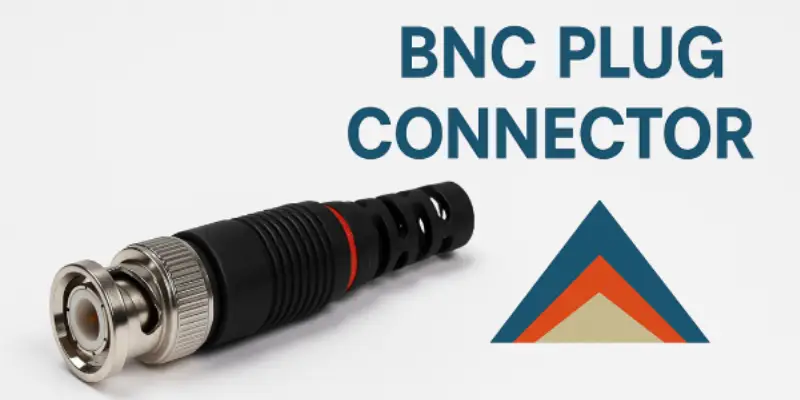
Before discussing the different types of applications, let's take a moment to define the term BNC female-to-female adapter. The BNC stands for Bayonet Neill-Councilman, which is a coaxial cable connector typically found in many types of radio frequency applications. The BNC connector is constructed with a simple method allowing for a quick method of connection where a bayonet type connection allows for a secure connection with a twist lock with no tools required to securely lock the connection.
The BNC female connector will have an inner pin that is circular and an outer threaded sheath. As a result of the fact that the female to female designation indicates that both ends of the adapter are female, it will provide a means of connecting two male BNC connectors.
Typically, these adapters are constructed from durable metals such as brass and nickel-plated for protection from corrosion; furthermore, they use materials like Teflon or polyethylene as an insulator. Although the sizes will vary, standard for most video and of applications will be 50 Ohm; however, for broadcast video, the typical size is 75 Ohm. The design of the BNC connector ensures that there will be little signal loss, making it extremely useful for transferring high-frequency radio frequency (RF) signals, up to a few gigahertzes. You have probably used a BNC connector before if you have ever used cable television or any type of oscilloscopes.
BNC Female to Female Adapters - Common Uses BNC female-to-female adapters are very versatile in their use and there are many industries where they are used. Here are just some of the common uses for BNC adapters:
Security Systems CCTV Systems:
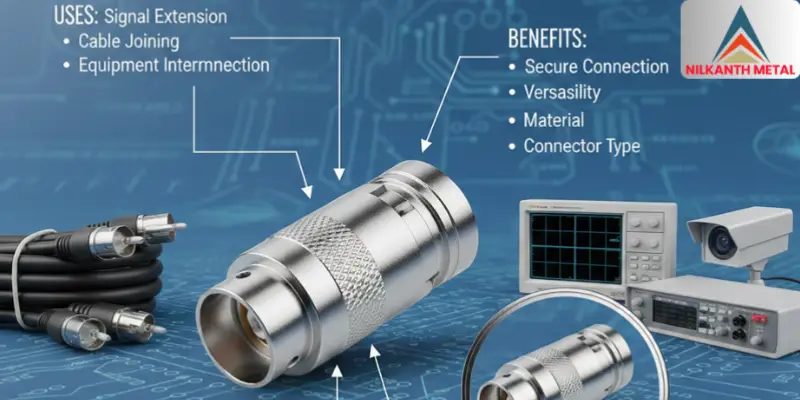
Most CCTV setups utilise BNC connectors to connect cameras to Digital Video or monitors; therefore, BNC female-to female adapters enable you to create extended cable runs and/or connect different manufacturers' products. If you have two cables with male terminations, you use this type of adapter to connect the two so that you do not lose any video signal during the process.
BNC connectors are frequently utilized in several ways to assist professional audio installations and home theatre setups. Composite video signals from devices such as VCRs, older televisions and test equipment employ BNC connectors as they allow easy connections between many different devices while avoiding soldering, such as patching bays or temporary hook ups at events.
Networking and telecommunications make use of BNC connectors in RF testing as well as connecting signal generators, spectrum analysers and antennas together. BNC connectors allow engineers to create rapid set-ups for testing or prototyping signals on one another. For example, engineers may connect oscilloscopes with signal sources to obtain more accurate readings.
BNC connectors are found in TV studios and during live broadcasts for SDI. Female-to-female adapters allow operators to extend signals between cables or to connect various devices together. It is essential that broadcasters maintain the integrity of their signals. BNC connectors facilitate and support signal integrity in high-to-medium-volume environments.
Hobbyists and project developers will frequently utilize BNC connectors in projects that incorporate devices like Arduino Boards, Raspberry Pi and amateur radio stations. As a result, hobbyists can develop numerous projects; one aspect of this type of project would be to use RF modules to connect GPS antennas and Wi-Fi extenders. BNC connectors serve as a reliable option for connection in situations that require low-loss and secure connections.
How to Choose the Right BNC Female-To-Female Adapter?
Selecting the proper adapter will enable your device to operate optimally. As you go through the selection process, you need to check for the following:
- Impedance Matching – Most BNC connectors are available in both 50 ohms and 75 ohm types. If you're connecting to an existing system, be sure to check that the impedance of the adapter is the same as your system.
- Material/Build Quality – Look for adapters that have a brass or high-quality metal housing and are plated with either gold or nickel for best conductivity and corrosion resistance. Plastic adapters may break or degrade over time, resulting in reduced signal quality. Amphenol and Pomona are examples of manufacturers that produce quality BNC adapters.
- Frequency Rating – Ensure that the adapter is rated for the frequencies you are using (the higher the frequency, the lower the loss). If you are using high-speed applications like 4K video, select an adapter rated in the GHz range.
- Size/Form Factor – The standard size for BNC connectors is approximately 1/2 inch in diameter; however, there are mini and micro versions available for space-constrained applications. Make sure you measure your connectors to verify the proper fit before purchasing. A BNC adapter may be required in either a panel-mount style or inline style.
- Environmental Considerations – For outdoor and harsh environments, look for weather resistant adapters that have seals to prevent moisture getting in. If you are only using the adapter indoors, then a basic model should be sufficient.
- Price and Brand Reputation – There are lower end models available, but price shouldn't be the only consideration when choosing a BNC adapter; choose a reputable brand when selecting to ensure long life. Check out reviews on Amazon and other electronics related forums to see how well they perform in the real world.
- Additional Features – Some BNC adapters will include strain relief or colour coding for easy identification. If you are using the adapter in a professional environment, it is advisable to select a model that has a certification such as RoHS compliance for safety.
Some BNC adapters will include strain relief or colour coding for easy identification. If you are using the adapter in a professional environment, it is advisable to select a model that has a certification such as RoHS compliance for safety.
To ensure compatibility, take your existing cables to an electronics store or check online for specifications on the product. If you are still uncertain, speak to a specialist to ensure you avoid costly mistakes.
The BNC female to female adaptor is an indispensable piece of equipment in every electronic technician’s toolbox. It is used to aid in the connectivity of video, audio and RF signals together. Its wide array of potential applications, as well as its numerous advantages including ease of use, durability and good signal integrity make it a significant item in today's technology age.
Recent Post

september, 12 2025
Brass Fasteners Manufacturer - Quality, Durability, and Precision with Nilkanth Metal
August, 20 2025
UHF Plug Connector: A Comprehensive Guide



April, 28 2025
Your Trusted Source for High-Quality Brass Air Valves


February, 14 2025
Versatile Brass and Steel Screws Customized for Industrial Sectors

July, 19 2024
What is Core Vents?