How to Choose the Right BNC Female to F Male Adapter Plug for CCTV, TV & RF Connections
Far beyond just gadgets, tiny parts shape how well things link together. When cameras watch spaces or televisions show pictures, small pieces decide if signals flow smoothly. A familiar helper shows up as a BNC female on one end, an F male on the other - joining mismatched wires without fuss. Choosing among them isn’t always obvious. Each version behaves differently under real conditions. This guide covers what matters - compatibility, quality, how to skip expensive errors. When looking at other options, consider that a bnc female to rca adapter often works well linking BNC sources to RCA ports across different systems.
Understanding BNC Female to F Male Adapters
Jump ahead of picking one, first understand what this piece actually handles. Twist-lock BNC ends show up often in work grade video gear - think security cams or radio frequency tools - thanks to how they stay put once clicked in. Now the F type, that one pops up on home cable boxes and web hook-ups, relies on screwing it tight. Linking these two happens through an adapter: female BNC slot meets male F pin. That bridge matters when plugging legacy surveillance rigs into current television inputs or stretching signal reach across mismatched jacks.
Picture a security setup where the camera speaks one connector language yet the screen needs another. That mismatch matters more than it sounds. A poor choice here could mean flickering footage or ghost images on display. Some gear insists on specific links to pass crisp visuals properly. Get it right, then clarity stays intact from source to screen. Wrong piece inserted? Expect headaches nobody planned for. Signal quality stays strong across stretches of cable when used in radio frequency tasks, say connecting antennas. Switching to a bnc female to rca piece? That suits linking audio-visual gear just fine yet if the job involves only rf feeds or television coax runs, going with bnc to f makes more sense.
What to Know Before Picking a BNC Female to F Male Adapter
Picking an adapter means lining up what you need with what it offers. Think through these details before deciding. What matters most? Speed, size, compatibility - each plays a role. One detail might matter more than the rest. Build your choice around that.
1. Compatibility and Connector Types Start by checking if things match up. One side of the adapter takes a male BNC plug - make sure your gear uses that type. On the opposite end, the F connector needs to twist securely into an F-type jack on your device. Take measurements of what you already have before buying anything new. When used with surveillance systems, verify it handles frequencies around 3 GHz, common for high-definition video signals. A signal stays strong when the right adapter moves it along. For RCA gear, picking one that changes BNC into composite works better - especially if you connect to an old television or tape machine.
2. Material and Build Quality Outdoors puts stress on surveillance gear. Pick fittings crafted from solid stuff - think brass or nickel-coated metal - they stand up to rust better. When it comes to electrical flow, gold-tipped connections help keep signals strong. Flimsy plastic versions may connect at first, yet crumble when weather turns rough. When linking RF gear, go for versions that block water using rubber gaskets. If an adapter joins BNC female to RCA, build strength matters - metal lasts longer out there.
3. Impedance and Signal Quality Picture gets fuzzy when connections do not match properly. Some cables like BNC or F types usually run at 75 ohms, common for television feeds. Signals bounce back if the numbers differ, leading to glitches on screen. Look up what the connector says it handles - better models stick exactly to 75 ohms from end to end. Clear video matters whether you’re watching security feeds or regular channels. Switching connections? That female BNC to RCA piece should manage the 75-ohm shift without hiccups. Screen glitches fade when signals stay clean.
4. Frequency Range and Bandwidth A single setup rarely fits every signal type. While regular television may run fine on just 1 gigahertz, systems like high-definition surveillance gear often need 3 or more. Picking a connector built for your top frequency keeps things moving smoothly. If the part handles too little data, quality drops fast under load. Using a bnc female to rca piece? Check that it works well at least up to 10 megahertz - common for basic video feeds.
Hobbyists tinkering with homemade radio frequency setups find this piece handy - no need to weld parts together. What stands out? The way it adapts on the fly during trial runs.
5. Ease of Installation and Design Check how it feels in your hand. Designs that fit well often have soft edges or distinct colors on each end, making them easier to plug in correctly. Certain models include brackets or screws for fixed locations. When moving between jobs, smaller versions take up less space in a kit. A label showing "BNC" and "RCA" helps prevent mix-ups when plugging cables together.
BNC Female to F Male Adapter Types by Use
Fitted for different jobs, adapters change shape depending on need. What they do shifts across uses like surveillance video, broadcast signals, television links - each setup asks for its own match.
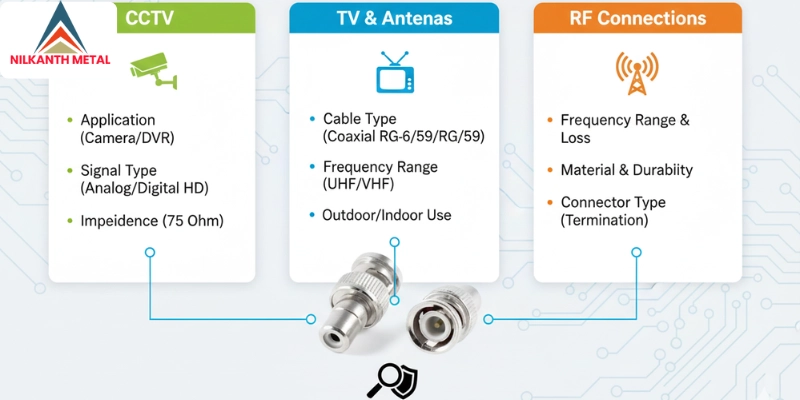
For CCTV Systems When it comes to surveillance gear, BNC plugs are common because they work well. To link a CCTV camera to a monitor or recorder with F-style ports, use a BNC female to F male adaptor. Say your camera outputs through BNC but the display only takes F - this piece fits right in between. Pick ones with shielding when there's lots of electrical noise around. In cases where sound matters too, swap in a BNC female to RCA version so video and audio go separate ways.
For TV Connections Signal paths shift smoothly when you link BNC gear to a coax-fed television using this adapter - common in cable systems with F connectors. Instead of losing quality, feeds travel clean, whether live broadcast or streamed content arrives. Old-school configurations gain flexibility; plug a BNC output into an RCA jack on the set through a dedicated female-to-RCA piece for basic video routing.
For RF Connections This adapter keeps connections tight where radio gear is used. High frequencies pass through cleanly, which matters when sending broadcasts live. For hobbyists adjusting antennas, the screw-on tip holds firm during tweaks. When sound travels alongside radio waves, swapping BNC to RCA opens up options.
Common Errors and Practical Advice
Mistakes happen when plugs wiggle inside adapters, creating shaky contact. In spots flooded with electrical noise, skip anything without shielding. A tight squeeze? That usually means trouble - mismatched parts break easily.
Start by checking adapters using a multimeter - make sure current flows through. A dry spot at home works well for keeping spare ones safe. When you run several devices together, mark each cable clearly. Try the bnc female to rca piece only after hooking up dependable wires. Look them over now and then; signs of damage show up fast.
Final Thoughts Empowering Your Connections
Picking a solid BNC Female to F Male adapter keeps your CCTV, TV, or RF gear running without hiccups. Signal strength holds up better when build quality matters more than price tags. Instead of guessing, match the connector to what your devices actually need. Some may swap to a bnc female to rca version when flexibility becomes key. Brands such as Amphenol or Belden tend to last longer under real conditions. Before buying anything, take time to compare actual user feedback. If confusion hits, talking through options with someone experienced helps clarity. Well-chosen parts make systems run smoother than expected. Reliable links between components often go unnoticed - until they fail. Connection success hides in details most overlook at first glance.
Recent Post
August, 20 2025
UHF Plug Connector: A Comprehensive Guide



April, 28 2025
Your Trusted Source for High-Quality Brass Air Valves


February, 14 2025
Versatile Brass and Steel Screws Customized for Industrial Sectors

July, 19 2024
What is Core Vents?