What Is a BNC Female to F Male Adapter Plug? Complete Beginner’s Guide (2025)
If you have just begun to learn about Electronics / Networking / Audio-Visual setups, you may have come across many different types of connectors, which can be intimidating. One connector that can help simplify your life when connecting different types of connectors is a BNC female to F male adapter plug. In this beginner's guide for 2025, we will explain what this adapter is, how it works and why it's so important in our Tech-driven world. You will discover that a basic understanding of it will not only help you with your home network setups, troubleshooting broadcast equipment, and experimenting with DIY projects but will also save you valuable time and effort.
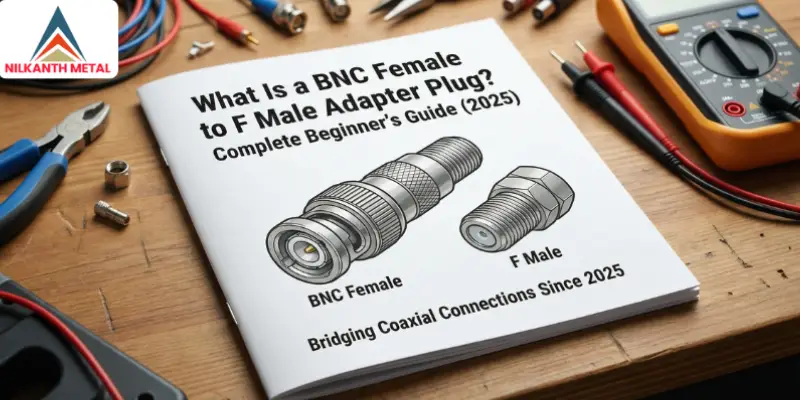
A BNC female to F male adapter plug is essentially a coaxial adapter converting a BNC female connector into an F male connector. This type of adapter allows the connection of two devices using two different types of connectors, i.e., a BNC camera connected via coaxial to an F-type cable used for cable TV and/or internet access. In 2025, with the growth of high-speed internet connections, the introduction of 5G networks, and the upcoming development of smart home connected devices, these types of adapters will play an integral role in providing compatibility between older legacy devices and newer generation devices.
BNC and F Connector Adapter
Before looking at the adapter, we should discuss the types of connectors it connects. BNC is used in many RF-related applications such as video security cameras, test equipment and networking. It is named from the inventors' last names and provides easy, quick secure connections with its bayonet-style locking mechanism. The BNC female contains a socket for male pins along with a threaded area inside it.
F Connectors are found in many coaxial cable systems, especially in cable TV, satellite dish and broadband internet systems. The letter F refers to Footing or the fact that it has a threaded design. F Male connectors use external threads to fit into the female F connector providing a tight seal that is also weatherproof.
The job of the adapter is to allow the connection between F Male and BNC Female to be utilized by connecting the BNC Female to the F Male via the threaded area of the F Male.
A BNC Female to F Male Adapter Plug physically measures approximately 1-2 inches in length and is made out of a conductive material such as brass or nickel plated steel for durability and excellent conductivity.
BNC and F Connectors Explain
Before we get into how an adapter works, we will first discuss the types of connectors that the adapter will be bridging. BNC connectors are often used in RF applications, such as video surveillance, testing equipment, and telecommunications. The BNC connector was developed by Bayonet Neill Councilman et al and features a bayonet lock mechanism for easy, quick, and secure connections. A female BNC connector contains internal threads for a male pin, as well as a socket for that pin.
F connectors, on the other hand, are common in coaxial cable systems, especially in cable television systems, satellite TV systems, and broadband internet systems. The letter 'F' refers to the threaded connector design. F male connectors contain a threaded screw that mates with an F female counterpart, forming a watertight seal.
The BNC to F adapter effectively converts an F female connector to an F male connector. The adapter takes the socket of the female BNC connector and converts it into the threaded end of the male F connector, allowing for the cross connection of the two types of connectors.
The F to BNC Male Adapter Plug consists of a female BNC connector to an F male connector. The adapter plugs are small, roughly 1 to 2 inches in length, made off with durable and conductive characteristics.
Various Types of Female BNC to Male F Adapters
Adapting to the needs of various users, there are many different types of Female BNC to Male F Adapters on the market. In 2025 the following types of Female BNC to Male F Adapters will be plentiful:
- Standard Adapters – These are the basic versions that can be used every day; they are easy to reorder as more will be available when ordered in bulk, namely from manufacturers, wholesalers and retailers.
- Right Angle Adapters – These types of adapters are bent at 90 degrees so that they may fit into tight fitting spaces such as when installed in wall-mounted systems. This application is most useful when mounting devices to walls.
- Panel-Mount Adapters – These types of adapters are intended for use as a means of securing a permanent connection to an equipment rack.
- Weatherproof Adapters – Weatherproof adapters have been sealed with rubber grommets to allow for outdoor type applications where exposure to moisture and/or wetness is likely to occur, such as the satellite installation industry.
- High Frequency Adapters – These types of adapters are rated and tested for usage at frequencies of 4GHz and beyond for utilization within advanced Networks.
Any purchase made should include all relevant manufacturer information; any items purchased that meet RoHS compliance standards means they are safe and free from any hazardous substances.
What Makes the BNC Female to F Male Adapters Operate
The operation of both female and male gender types of adapters is very similar in simplicity. The female BNC adapter has a bayonet latch mechanism designed to connect the BNC Male plug into the female connector of the adapter. Once the bayonet connection is made, the adapter will convert to an F Male Connector which will allow connection through the F female connector located on a COAX Cable or other coaxial types of cables or devices.
This process maintains the integrity of the COAX Cable and Adapters
- Signal Path : The signal is transmitted through the centre conductor of a coaxial cable, while the outer shielding of that cable provides a ground reference for the signal returned to that centre conductor.
- Impedance Matching : Most BNC and F connectors are designed for an impedance of 75 ohms, which means they will have minimal loss of signal when transmitting over that distance.
- Locking Mechanism : Some connectors have a locking mechanism to prevent them from being accidentally disconnected. This is particularly important if that connector is to be used in a dynamic environment.
In 2025, with the advent of smart adapters, many manufacturers include an LED indicator to show the status of the connection or even Bluetooth capability for remote access.
Advantages of Using a BNC Plug with Wire Cable
- Excellent Signal Quality: The coaxial design and high-quality materials ensure the BNC Plug with Wire Cable provides crystal-clear signal transmission with negligible loss.
- Easy Installation: The bayonet-style connection eliminates the need for tools or soldering, making installation fast and user-friendly.
- Durable and Long-Lasting: With robust metal construction and corrosion-resistant plating, the BNC Plug with Wire Cable withstands wear, vibration, and environmental factors.
- Versatile Applications:It’s suitable for a wide range of uses - from video surveillance to test equipment - due to its ability to carry both analog and digital signals efficiently.
- Reliable Locking Mechanism:The bayonet system ensures a tight connection, preventing accidental disconnections during operation.
Where is the BNC plug (with wire cable) used?
The BNC plug with wire cable is one of the most commonly used connectors in many industries. Here are some key areas where it's simply impossible to do without:
- CCTV and Security: BNC connectors are the backbone of CCTV setups. BNC plugs connect cameras to DVRs (recorders) and monitors, ensuring uninterrupted and clear video.
- TV Broadcasting and Video-Audio: These connectors are used in video switchers, monitors, and large professional broadcasting systems. They maintain signal clarity even over long distances.
- Testing and Measuring Equipment: Scientists and technicians in the lab use BNC plugs in oscilloscopes, signal analyzers, and other testing devices to capture accurate data.
- Telecom Systems: This connector supports RF communication and fast data transmission in telecom equipment and routers.
- In industrial and aerospace: It is so reliable and accurate that it is often used in high-performance military, aviation, and industrial monitoring systems.
How to Choose the Right BNC Plug with Wire Cable
When selecting a BNC Plug with Wire Cable, consider these factors:
- Impedance Matching: Choose 50Ω or 75Ω depending on your device’s requirements.
- Cable Type: Ensure compatibility with RG58, RG59, or RG6 coaxial cables.
- Length: Longer cables can cause signal attenuation — pick a suitable length for your setup.
- Material: Look for brass or nickel-plated connectors for better conductivity and longevity.
- Environment: For outdoor setups, opt for weatherproof or shielded cables.
A high-quality BNC Plug with Wire Cable from a trusted manufacturer guarantees consistent performance and durability.
Why Buy from a Trusted BNC Plug with Wire Cable Manufacturer
When it comes to electronic connectors, quality and precision make all the difference. Choosing a reputed BNC Plug with Wire Cable manufacturer ensures:
- High-grade materials and plating for durability.
- Strict quality testing and compliance with industry standards.
- Reliable performance and signal integrity.
- Customization options for specific applications.
A professional supplier not only provides top-quality BNC Plug with Wire Cable products but also offers expert support and timely delivery ensuring you get the best value.
Conclusion
The BNC Plug with Wire Cable is a small yet vital component that ensures stable, reliable, and high-quality signal connections across multiple industries. From CCTV systems and broadcasting studios to telecom networks and laboratory instruments, this connector delivers unmatched performance and longevity.
Its quick-connect design, durability, and versatility make it an essential part of any modern communication or monitoring setup. For optimal results, always choose a BNC Plug with Wire Cable from a trusted manufacturer who prioritizes quality and precision engineering.
When performance matters, investing in the right BNC Plug with Wire Cable can make all the difference ensuring that your systems run efficiently and your signals remain strong and stable.
Recent Post

september, 12 2025
Brass Fasteners Manufacturer - Quality, Durability, and Precision with Nilkanth Metal
August, 20 2025
UHF Plug Connector: A Comprehensive Guide



April, 28 2025
Your Trusted Source for High-Quality Brass Air Valves


February, 14 2025
Versatile Brass and Steel Screws Customized for Industrial Sectors

July, 19 2024
What is Core Vents?