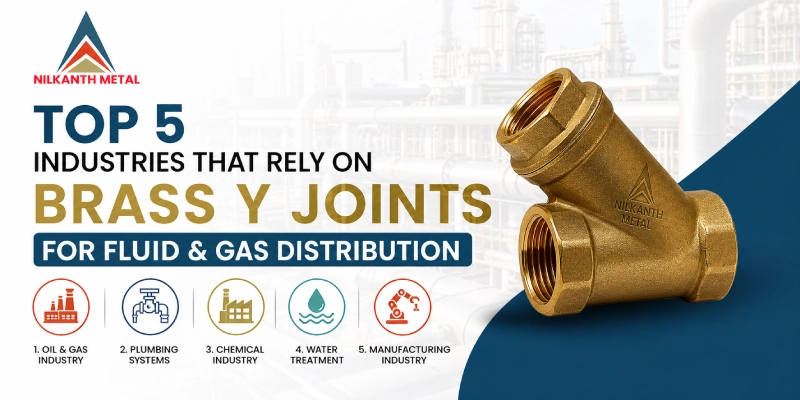
Top 5 Industries That Rely on Brass Y Joints for Fluid & Gas Distribution
A single brass y joint splits one line into two without sacrificing pressure, and that small mechanical fact quietly shapes how entire industries move fluid and gas. Walk through a commercial kitchen, a farm irrigation system, or a compressed air line in a machine shop, and you'll find this fitting doing work nobody notices until it fails. This piece breaks down the five industries that depend on brass y joints most heavily, why brass beats other metals for the job, and what to check before you buy one.
A brass y joint is a Y-shaped fitting that splits one fluid or gas line into two outlets, or merges two lines into one, while resisting corrosion and holding pressure across wide temperature swings. HVAC, agriculture, and manufacturing all use them to route water, air, and gas through shared piping.
HVAC and Plumbing: Where Brass Y Joints Keep Water and Air Moving
Plumbing and HVAC crews reach for a brass y joint more than any other splitting fitting because brass tolerates constant exposure to water without corroding from the inside out. A copper or PVC line pushed through a plastic splitter tends to crack under seasonal temperature swings, while brass expands and contracts at a rate close enough to copper piping that the joint stays sealed for years.
Hot water heaters, boiler feed lines, and dual-zone air handlers all rely on this fitting to divide a single supply into two controlled paths. A technician installing a two-zone heating system, for example, uses a brass y joint at the manifold to send water to separate loops without needing two independent supply lines from the source.
Threaded connections matter just as much as the metal itself. Many installers pair a brass y joint with a brass joint nipple to extend a short run without introducing a weak point, since nipples threaded from the same brass stock resist galling and cross-threading better than mixed-metal alternatives. That consistency also makes future repairs easier, since a plumber can replace one damaged section without re-threading the whole assembly.
The table below shows how the three most common fitting types in this category compare on the points that matter to installers.
| Fitting Type | Primary Use | Pressure Rating | Typical Lifespan |
|---|---|---|---|
| Brass Y Joint | Splits one line into two | Up to 400 PSI | 20–25 years |
| Brass Joint Nipple | Extends or connects threaded runs | Up to 400 PSI | 20–25 years |
| F to Female Plug | Caps or converts a threaded end | Up to 400 PSI | 15–20 years |
Agriculture and Irrigation Systems Depend on Split-Line Reliability
Farms move water across enormous distances, and every meter of that distance uses fittings, so an irrigation network built with cheap splitters usually fails during the growing season, not before it. A brass y joint holds up against fertilizer runoff, hard well water, and the direct sun exposure that breaks down plastic fittings within a few seasons.
Drip Irrigation Lines
Drip systems split a main line into dozens of smaller feeder lines, and the first split off the main pressure source usually carries the highest load in the entire network. Farmers install brass fittings at that first junction specifically because a plastic failure there would shut down the whole zone rather than just one row.
Livestock Watering Systems
Cattle and poultry operations run water lines through open fields where equipment, weather, and animals all put stress on exposed fittings. A brass joint nipple extending a supply line to a trough, paired with a y joint splitting that supply between two pens, survives contact that would crack a plastic equivalent within a season.
How Does a Brass Y Joint Handle Compressed Air in Manufacturing?
Compressed air systems pressurize fittings differently than water lines do, since air compresses and expands with temperature changes in a way liquid doesn't, putting repeated stress on threaded joints throughout a shop's operating day. A brass y joint handles that cycling well because brass has enough give to absorb minor expansion without the threads loosening over time, unlike aluminum fittings that can work themselves loose after thousands of pressure cycles.
Machine shops split a single compressor line to run two pneumatic tools at once, most often through a y joint mounted near the point of use rather than back at the compressor itself. Mounting it close to the tools shortens the run of flexible hose needed and reduces the pressure drop between the compressor and the tool.
An f to female plug often finishes that connection, letting a shop swap tools on one branch of the y joint without shutting down air flow to the other branch. That flexibility matters most in shops running multiple air tools off a single compressor, where downtime on one line shouldn't stop work on another.
Oil, Gas, and Fuel Distribution Rely on Corrosion-Resistant Splits
Fuel and gas lines carry substances that degrade cheaper metals fast, which is why brass remains the standard fitting material across fuel distribution even where copper or steel pipe makes up the rest of the run. A brass y joint resists the sulfur compounds present in many fuel blends far longer than zinc-plated steel, which can start corroding within a year of exposure to the same conditions.
Propane suppliers use y joints to split a single storage tank output into two appliance feeds, a setup common in restaurants running both a stove line and a water heater line off one tank. The fitting has to hold a tight seal under pressure because even a slow leak in a gas line creates a real safety hazard, not just an efficiency problem.
Fuel depots and small-scale distributors apply the same logic at a larger scale, using brass fittings throughout transfer systems specifically because the cost difference between brass and cheaper alternatives is small compared to the cost of a line failure. Inspectors checking these systems routinely flag corroded steel joints years before a comparable brass fitting shows any wear at all.
Food and Beverage Processing Needs Fittings That Won't Contaminate Product
Processing plants can't use fittings that leach anything into a product line, and brass meets food-safety standards that many plastics and coated metals don't without additional certification. A brass y joint routes water, steam, or CO2 through processing equipment while meeting the same sanitary requirements that govern the rest of a plant's piping.
Beverage bottling lines split CO2 supply between multiple filling heads using this exact fitting, since a single tank often needs to feed several stations running at once during a production shift. Dairy and brewing operations apply the same setup for cleaning-in-place systems, where one water source splits to reach multiple tanks during a wash cycle.
Sanitary-grade brass fittings cost more upfront than standard plumbing brass, and plants that skip that upgrade for splitter fittings alone often end up replacing them anyway once an inspector flags the non-rated fitting during an audit.
Frequently Asked Questions
What does a brass y joint do?
A brass y joint splits one fluid or gas line into two separate outlets, or combines two supply lines into a single line, depending on which direction the flow runs through it.
Can I use a brass y joint for compressed air?
Yes, brass y joints handle compressed air well because the metal resists the loosening that pressure cycling causes in softer metals like aluminum, and most are rated well above standard shop air pressures.
What's the difference between a brass y joint and a brass joint nipple?
A y joint splits a line into two paths, while a brass joint nipple simply extends or connects two threaded fittings in a straight run without branching the flow.
Do I need an f to female plug with a y joint?
Not always, but an f to female plug is useful when one branch of the y joint needs a different thread type or needs to be capped without disrupting flow to the other branch.
How long do brass y joints last?
Most brass y joints last 20 to 25 years under normal water or air pressure, though fuel and chemical applications can shorten that lifespan depending on what's running through the line.
Picking a brass y joint over a plastic or aluminum alternative isn't really a judgment call once you look at what's running through the line and how long the fitting needs to last. The upfront cost difference is small, and the failure cost on the other side almost never is.
If you're speccing a new system, check the pressure rating and thread type against your existing pipe before ordering, and keep a brass joint nipple or an f to female plug on hand for whichever branch needs converting. That one detail saves a second trip to the supplier.
Recent Post
August, 20 2025
UHF Plug Connector: A Comprehensive Guide


April, 28 2025
Your Trusted Source for High-Quality Brass Air Valves


February, 14 2025
Versatile Brass and Steel Screws Customized for Industrial Sectors

July, 19 2024
What is Core Vents?